Adaptogen lattes, mushroom coffees and stress-support gummies are turning botanical ingredients into headline functional foods. Ashwagandha, reishi and lion’s mane are among the names drawing attention. But the polished packaging can make the science look more settled than it is.
What “adaptogen” means—and what it does not
“Adaptogen” is a marketing and traditional-use term for botanicals said to help the body adapt to stress; it is not a standardised proof of clinical benefit. Different products may use different plant parts, extracts and doses. Results from one preparation cannot automatically be applied to another supplement or a mushroom drink.
Ashwagandha: promising signals, real cautions
Small clinical studies suggest some ashwagandha preparations may help with stress or sleep over the short term. The US National Center for Complementary and Integrative Health says evidence remains limited for many other health claims, and long-term safety is not known. Reports of rare liver injury have also been linked to ashwagandha products.
Ashwagandha may not be suitable during pregnancy or breastfeeding and may interact with thyroid, blood-pressure, diabetes, sedative or immune-suppressing medicines. Anyone taking regular medication or managing a health condition should consult a pharmacist or clinician before use. Stop taking a supplement and seek medical advice if concerning symptoms develop.
Medicinal mushrooms: fascinating biology, early human evidence
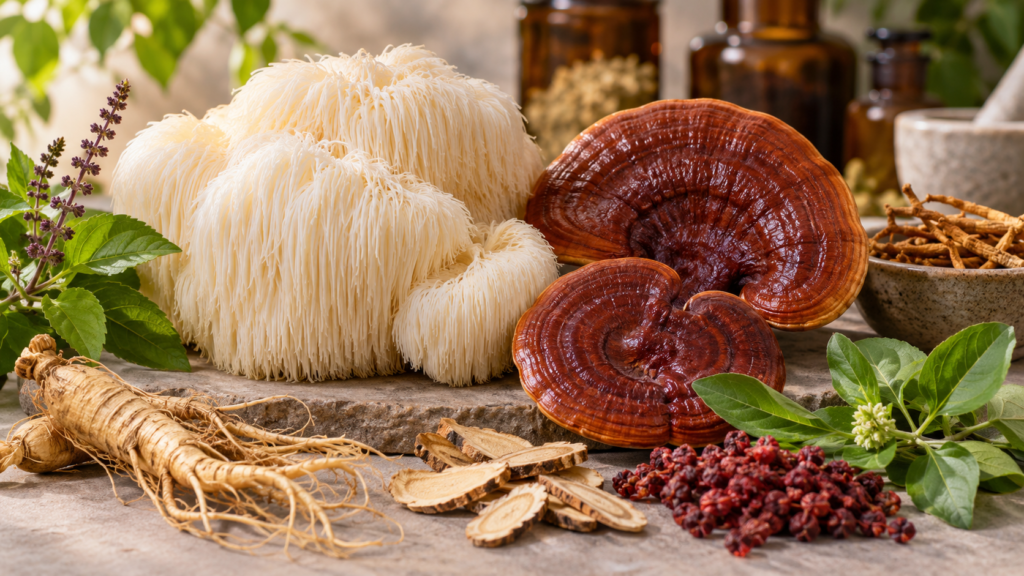
Reishi, lion’s mane and other mushrooms contain compounds being studied in laboratory and early clinical research. That work is not the same as showing that a coffee, capsule or food product improves immunity, memory or longevity in everyday users. Human trials are often small, short and based on particular extracts; products sold to consumers may differ in composition and quality.
Calling a product “natural” does not guarantee that it is effective, safe for everyone or free of interactions. Supplement quality and ingredient amounts can vary, so transparent labelling and reputable manufacturing matter.
A quick checklist before buying
- Look for the exact ingredient, plant or mushroom part, extract and amount per serving.
- Be wary of promises to “balance hormones,” “reset cortisol,” treat anxiety or prevent disease.
- Check for medicines and conditions that may make an ingredient unsuitable.
- Ask a qualified healthcare professional before combining supplements with prescription medicines.
- Remember that a drink or powder cannot replace assessment or treatment for persistent symptoms.
There is a legitimate research story here, and carefully designed trials may identify useful applications. For now, the most professional headline is also the most honest: adaptogens and medicinal mushrooms are trending, but evidence is ingredient-specific and still developing.
Sources and further reading
- US National Center for Complementary and Integrative Health: Ashwagandha
- UCLH: Mushroom supplements and the evidence
- NCCIH: Using dietary supplements wisely
This article is for general information and is not a substitute for personalised medical advice.