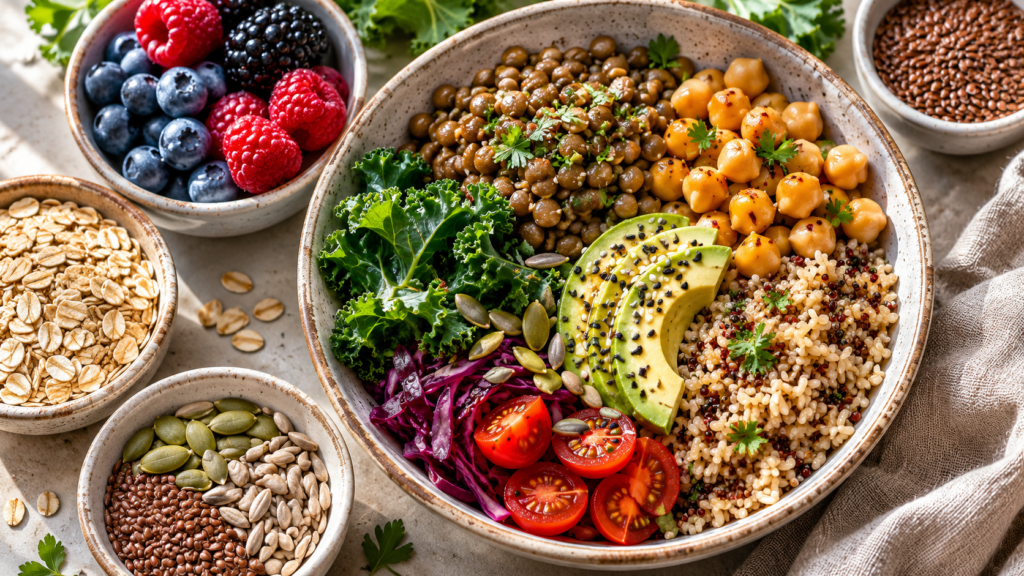
The fibre trend has moved from nutrition advice to social media challenge. But when it comes to gut health, the useful question is not “How much can I add?”—it is “Which sources suit me, and how do I increase them comfortably?”
“Fibremaxxing” is the popular name for deliberately increasing dietary fibre, often by adding beans, whole grains, fruit, vegetables, seeds or fibre powders. The idea connects to a broader 2026 focus on gut health and prebiotic ingredients. It also invites a more measured look at what fibre can—and cannot—do.
Why fibre is back in the spotlight
Fibre supports normal digestion and helps prevent constipation. In the UK, the recommended adult intake is 30 grams a day, while average intake is lower. Eating a variety of fibre-containing foods is a practical way to move towards that target; it also brings other nutrients and makes meals more filling.
Different foods provide different forms of fibre. Oats, beans, lentils, fruit, vegetables, nuts and whole grains are familiar options. Some fibres are fermented by gut microbes, which is one reason prebiotics—ingredients used by selected microbes—are a focus in food innovation. “Prebiotic” does not mean every product will have the same effect for every person.
Can you overdo it?
Increasing fibre very quickly can cause wind, bloating or changes in bowel habits, particularly if someone is not used to higher-fibre meals. A large serving of a concentrated fibre product is not automatically better than gradually adding foods across the day. Some people with digestive conditions may also need individual advice about the type and amount they tolerate.
For most people, a gradual increase and adequate fluids are sensible. If symptoms are persistent, severe or new, it is better to seek advice from a qualified healthcare professional than to keep escalating a trend-based diet challenge.
Food first—or supplements?
Whole foods make it easier to diversify fibre sources. Supplements can be useful in some circumstances, but the evidence depends on the specific fibre, dose and outcome being studied. For example, guidance for chronic constipation evaluates particular interventions and does not treat all fibres, foods or probiotic products as interchangeable.
That distinction matters for functional-food labels. A product may contain a fibre ingredient without proving that it “resets” the microbiome, cures bloating or guarantees a particular health result. Look for clear ingredient information and credible evidence tied to the actual formulation.
A balanced way to follow the trend
- Build variety with beans, lentils, vegetables, fruit, oats and whole grains.
- Increase portions over time and notice how your body responds.
- Check the amount and type of fibre on packaged-food labels.
- Treat dramatic “gut reset” or instant-detox promises cautiously.
- Ask a clinician or dietitian for tailored advice if you have a digestive condition or ongoing symptoms.
The takeaway: Fibre is a worthwhile everyday nutrition topic, but more is not automatically better for every person. A steady, varied approach is more useful than chasing a viral number.
Sources and further reading
- NHS: How to get more fibre into your diet
- UK Government Office for Science: Microbiome manipulation—evidence and research gaps
- British Dietetic Association: Evidence-based dietary guidance for chronic constipation
This article is for general information and is not a substitute for personalised medical or nutrition advice.