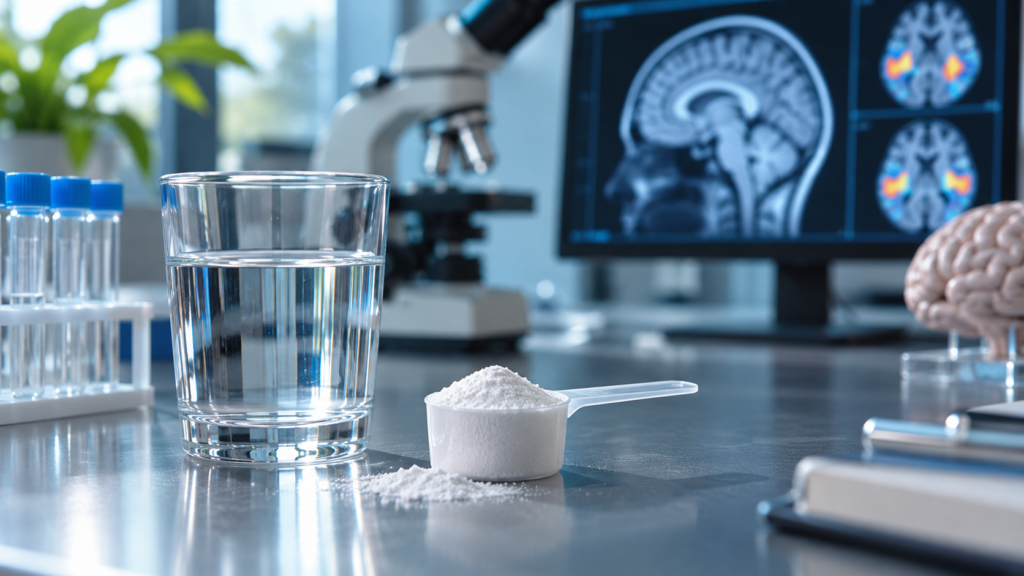
Creatine has moved from sports nutrition shelves into “brain health” conversations and everyday functional-food marketing. The science is strongest for a narrower use: creatine monohydrate can help support repeated high-intensity exercise and training adaptations. Claims that it reliably sharpens memory or focus are still a different story.
What creatine does—and where evidence is clearest
Creatine is a compound the body makes and also obtains from foods such as meat and fish. In muscle, it helps rapidly regenerate energy during short bursts of intense activity. Research and sports-nutrition position statements report that creatine monohydrate, used alongside resistance training, can improve training capacity and support gains in strength and lean mass. Effects vary, and the supplement does not replace training, sleep or a balanced diet.
That evidence is why creatine is now marketed far beyond traditional gym products: it appears in ready-to-drink beverages, bars and “healthy ageing” products. But the ingredient’s established performance role should not be stretched into unrelated promises simply because a product is labelled functional.
Brain claims: an interesting question, not a settled benefit
Creatine also plays a role in cellular energy metabolism in the brain, so researchers have studied possible cognitive effects. A biological rationale is not proof of a consumer benefit. The UK Nutrition and Health Claims Committee concluded that a cause-and-effect relationship has not been established between daily creatine intake of up to 3 grams and improved cognitive function. Research continues, but a supplement should not be presented as a proven memory or focus booster.
What shoppers should know
- Look for the form and amount of creatine per serving; many sports studies use creatine monohydrate.
- Check whether a product combines creatine with caffeine, stimulants or other ingredients.
- Do not assume “more” means better or that every branded blend has been tested as a finished product.
- People with kidney disease, pregnancy, or regular medication use should ask a healthcare professional before taking supplements.
- Competitive athletes may want products tested by a reputable sport-certification programme to reduce contamination risk.
For food and supplement developers, creatine is a strong example of why functional claims need precision. Its place in exercise nutrition is supported by a substantial literature; its promise for cognition remains uncertain. Consumers deserve labels that make that difference clear.
Sources and further reading
- NIH Office of Dietary Supplements: Dietary Supplements for Exercise and Athletic Performance
- UKNHCC: Scientific opinion on creatine supplementation and cognitive function
- International Society of Sports Nutrition: creatine position stand
This article is for general information and is not a substitute for personalised medical advice.