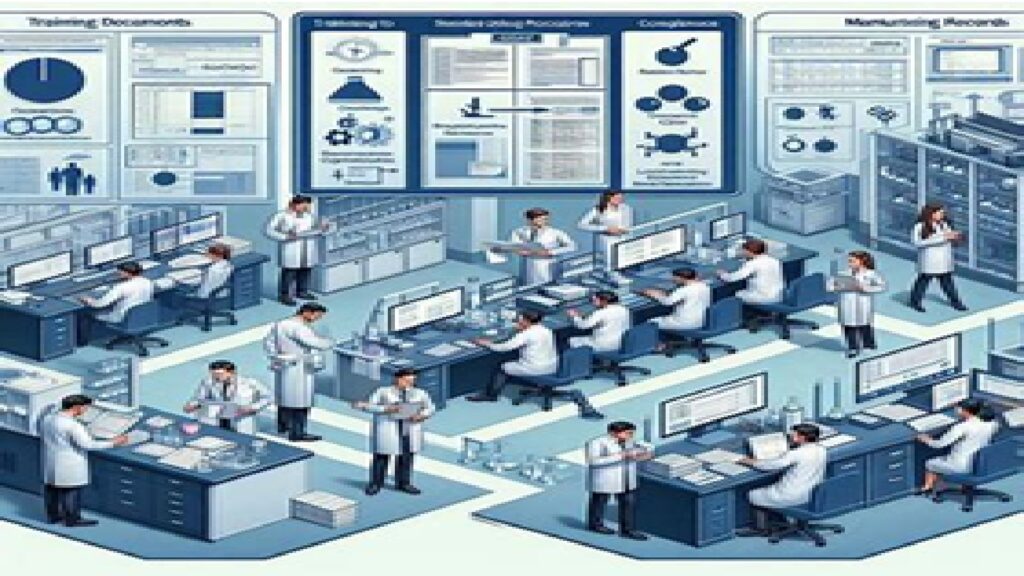

Ensuring Data Integrity, Scientific Accuracy & Regulatory Compliance
1. Purpose
To establish a robust, systematic, and scientifically sound procedure for conducting laboratory investigations related to Out of Specification (OOS), Out of Trend (OOT), atypical results, and laboratory deviations—ensuring data integrity, root cause identification, and regulatory compliance.
2. Scope
This SOP applies to:
- All Quality Control (QC) laboratory activities
- Analytical testing of raw materials, in-process samples, finished products, and stability samples
- All personnel involved in analytical testing, review, and investigation
3. Responsibility
- QC Analyst: Immediate reporting, preliminary assessment, and documentation
- QC Supervisor/Manager: Review and initiate investigation
- Quality Assurance (QA): Oversight, approval, and compliance verification
- Head – Quality: Final decision-making and closure approval
4. Definitions
- OOS (Out of Specification): Test results falling outside predefined acceptance criteria
- OOT (Out of Trend): Results deviating from historical or expected trends
- Atypical Result: Unexpected data that does not comply with normal patterns but within specification
- Laboratory Error: Error due to analyst, instrument, or method
5. Procedure
5.1 Identification of Abnormal Results
- Immediately identify any OOS, OOT, or atypical result
- Halt further processing/reporting of the affected batch
- Inform the QC Supervisor and QA without delay
5.2 Phase I Investigation (Laboratory Investigation)
Objective: To determine if the result is due to laboratory error
Checklist for Investigation:
- Analyst performance and training records
- Sample preparation procedure verification
- Instrument calibration and system suitability
- Glassware and reagent validity
- Environmental conditions during testing
- Calculation and data transcription review
Actions:
- Re-check raw data, chromatograms, and calculations
- Verify compliance with test method
- Interview analyst if required
⚠️ No retesting is allowed unless scientifically justified and approved
5.3 Hypothesis-Based Investigation
- Develop scientifically sound hypotheses
- Perform targeted experiments to confirm or reject hypotheses
- Document all findings with justification
5.4 Retesting Policy
Retesting is permitted only if:
- A clear assignable laboratory error is identified
- Justified scientifically and approved by QA
Retesting must:
- Follow predefined protocols
- Be documented thoroughly
- Not be used to “test into compliance”
5.5 Phase II Investigation (Full-Scale Investigation)
Initiated when no laboratory error is identified
Covers:
- Manufacturing process review
- Batch records and deviations
- Equipment performance
- Raw material variability
- Environmental and utility factors
5.6 Root Cause Analysis (RCA)
- Use tools like:
- Fishbone Diagram
- 5 Why Analysis
- Fault Tree Analysis
- Identify the true root cause, not assumptions
5.7 Corrective and Preventive Actions (CAPA)
- Define corrective actions to address the issue
- Implement preventive measures to avoid recurrence
- Assign responsibility and timelines
- Monitor effectiveness
5.8 Documentation
- Maintain complete, traceable records of:
- Investigation reports
- Raw data and observations
- Conclusions and decisions
- Ensure compliance with ALCOA+ principles (Attributable, Legible, Contemporaneous, Original, Accurate)
5.9 Conclusion & Batch Disposition
- Based on investigation outcome:
- Accept batch
- Reject batch
- Reprocess/rework (if applicable)
- Final decision must be scientifically justified and approved by QA
6. Precautions
- Avoid bias and premature conclusions
- Do not discard original data
- Ensure transparency and traceability
- Maintain regulatory compliance at all stages
7. References
- ICH Q7: Good Manufacturing Practice
- FDA Guidance on OOS Investigations
- WHO GMP Guidelines
- EU GMP Annex 11 & 15
🔍 Laboratory Investigation SOP – FAQs
1. What is a laboratory investigation in pharmaceutical quality control?
A laboratory investigation is a structured and documented process conducted to determine the root cause of abnormal analytical results such as OOS, OOT, or atypical findings. It ensures scientific accuracy, data integrity, and compliance with regulatory requirements by identifying whether the issue originates from laboratory error or manufacturing processes.
2. What triggers a laboratory investigation?
A laboratory investigation is initiated when:
- Results fall outside specification limits (OOS)
- Results deviate from historical trends (OOT)
- Unusual or unexpected data patterns are observed
- Analytical deviations or errors occur
Immediate action is required to prevent incorrect batch release decisions.
3. What is the difference between OOS, OOT, and atypical results?
- OOS: Results outside predefined acceptance criteria
- OOT: Results within limits but showing abnormal variation from historical data
- Atypical: Unexpected results that do not follow normal patterns but may still meet specifications
Each requires a different level of investigation and scientific evaluation.
4. What is Phase I laboratory investigation?
Phase I is the initial laboratory-based investigation aimed at identifying potential analytical or human errors. It includes checking raw data, calculations, instrument performance, reagents, and analyst activities before considering manufacturing-related issues.
5. What is Phase II investigation?
Phase II is a comprehensive investigation initiated when Phase I does not identify a laboratory error. It involves reviewing manufacturing processes, batch records, raw materials, equipment, and environmental conditions to identify the root cause.
6. Is retesting allowed during a laboratory investigation?
Retesting is strictly controlled and allowed only when:
- A clear assignable cause is identified
- It is scientifically justified
- It is approved by Quality Assurance
Unjustified retesting to obtain passing results is considered a violation of GMP.
7. What is “testing into compliance”?
“Testing into compliance” refers to performing repeated tests until acceptable results are obtained without identifying the root cause. This is a serious data integrity violation and is strictly prohibited in pharmaceutical practices.
8. Who is responsible for conducting laboratory investigations?
- QC Analyst: Detects and reports abnormal results
- QC Supervisor/Manager: Leads investigation
- QA Team: Reviews and approves investigation
- Quality Head: Final decision-making authority
Collaboration ensures a thorough and unbiased investigation.
9. What should be checked during Phase I investigation?
Key elements include:
- Analyst training and competency
- Sample preparation steps
- Instrument calibration and system suitability
- Reagents and standards validity
- Environmental conditions
- Data calculations and transcription errors
10. What is root cause analysis (RCA) in laboratory investigations?
RCA is a systematic approach to identify the fundamental cause of a problem. Tools such as 5 Why Analysis, Fishbone Diagram, and Fault Tree Analysis are used to ensure the actual cause—not symptoms—is identified.
11. Why is documentation critical in laboratory investigations?
Documentation ensures:
- Traceability of all actions and decisions
- Compliance with regulatory guidelines
- Data integrity as per ALCOA+ principles
- Readiness for audits and inspections
Incomplete documentation can lead to regulatory observations.
12. What is ALCOA+ in laboratory investigations?
ALCOA+ principles ensure data integrity:
- Attributable
- Legible
- Contemporaneous
- Original
- Accurate
Plus: Complete, Consistent, Enduring, and Available
These principles are mandatory in all investigation records.
13. Can an OOS result be invalidated?
Yes, but only if a clear and scientifically justified laboratory error is identified during Phase I. The justification must be documented, reviewed, and approved by QA.
14. What happens if no root cause is identified?
If no root cause is found:
- The investigation is classified as inconclusive
- Additional controls or CAPA may still be implemented
- Batch disposition is decided based on risk assessment and scientific justification
15. What is CAPA in laboratory investigations?
CAPA stands for:
- Corrective Actions: Fix the current issue
- Preventive Actions: Prevent recurrence
CAPA must be measurable, time-bound, and effectiveness-checked.
16. How are laboratory errors identified?
Laboratory errors may be identified through:
- Deviations from SOP
- Instrument malfunction
- Calculation mistakes
- Sample contamination
- Analyst handling errors
These must be clearly documented and justified.
17. What is the role of Quality Assurance (QA) in investigations?
QA ensures:
- Investigations are unbiased and scientifically sound
- Procedures comply with regulatory standards
- Decisions are justified and documented
- Final approval and closure of investigation
18. What precautions should be taken during investigations?
- Avoid assumptions and bias
- Do not discard original data
- Follow SOP strictly
- Ensure transparency
- Maintain proper documentation
19. How long should a laboratory investigation take?
Timelines may vary, but generally:
- Phase I: Within a few days
- Phase II: Within a defined timeline (e.g., 20–30 days)
Delays must be justified and documented.
20. Why are laboratory investigations important for regulatory compliance?
They ensure:
- Product quality and patient safety
- Compliance with FDA, WHO, and ICH guidelines
- Prevention of data integrity violations
- Audit readiness and reduced regulatory risk
For more articles, Kindly Click here
For pharmaceutical jobs, follow us on LinkedIn
For Editable SOPs in Word format contact us on info@pharmaceuticalcarrier.com
For more information kindly follow us on www.pharmaguidelines.co.uk