1. Purpose
To define a robust, validated, and risk-based changeover system that ensures:
- Complete elimination of cross-contamination risks
- Prevention of product mix-ups and labeling errors
- Maintenance of data integrity and traceability
- Compliance with global regulatory standards (GMP)
- Optimization of operational efficiency without compromising quality
2. Scope
This SOP applies to all changeover activities performed in:
- Manufacturing areas (solid dosage, liquids, sterile, etc.)
- Packaging lines (primary & secondary)
- Dispensing and sampling areas
- Warehousing interfaces (where applicable)
- Utilities linked to product contact (e.g., HVAC, compressed air)
3. Regulatory Basis / References
- WHO GMP Guidelines
- US FDA 21 CFR Part 210 & 211
- EU GMP (EudraLex Volume 4)
- ICH Q7 (API GMP)
- PIC/S Guidelines
- Internal Quality Manual
- Cleaning Validation Master Plan (CVMP)
4. Definitions
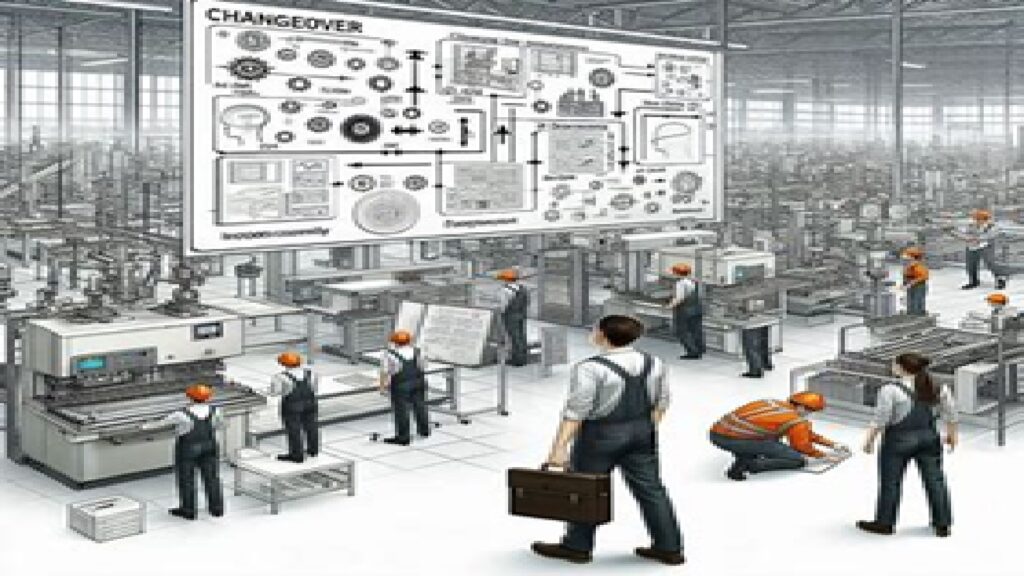
- Changeover: Controlled transition between different products, strengths, batches, or packaging formats.
- Line Clearance: Documented verification that the production/packaging line is free from previous product, documents, and materials.
- Worst Case Product: Product with highest risk (toxicity, solubility, potency) used for validation.
- MACO (Maximum Allowable Carryover): Acceptable residue limit for next product.
- Campaign Manufacturing: Sequential production under defined conditions without full cleaning.
- Hold Time: Maximum allowed time between cleaning and reuse.
5. Responsibilities
5.1 Production Department
- Execute changeover as per approved SOPs
- Perform cleaning, dismantling, and setup
- Ensure material reconciliation
- Record activities in real-time
5.2 Quality Assurance (QA)
- Approve line clearance (pre & post)
- Verify compliance with procedures
- Review and release changeover documentation
- Handle deviations and CAPA
5.3 Quality Control (QC)
- Perform residue analysis (swab/rinse)
- Support cleaning validation
- Approve analytical results
5.4 Engineering / Maintenance
- Ensure equipment functionality
- Perform preventive maintenance during changeover
- Calibrate instruments where required
5.5 Warehouse
- Ensure proper segregation and issuance of materials
- Prevent mix-ups during changeover
6. Risk Assessment (Critical Section)
Prior to changeover, perform a documented Quality Risk Assessment (QRM) considering:
- Product potency/toxicity
- Allergen or sensitizing properties
- Batch size and equipment complexity
- Cleanability and solubility of residues
- Shared vs dedicated equipment
Tools Used:
- FMEA (Failure Mode and Effects Analysis)
- Risk Ranking & Filtering
7. Materials & Equipment Required
- Approved cleaning agents (validated)
- Disinfectants (rotation-based)
- Cleaning tools (dedicated or color-coded)
- PPE (gloves, masks, goggles, suits)
- Vacuum systems (HEPA-filtered)
- Swab kits and sampling tools
- Status labels (CLEANED, DIRTY, UNDER CLEANING)
- Checklists and logbooks
8. Detailed Procedure
8.1 Pre-Changeover Activities
8.1.1 Batch Completion
- Ensure completion of the previous batch
- Record final yield and reconciliation
8.1.2 Material Reconciliation
- Count and reconcile:
- Raw materials
- Packaging materials
- Printed materials (labels, cartons)
- Investigate discrepancies immediately
8.1.3 Removal of Materials
- Remove:
- Residual materials
- WIP (Work-in-progress)
- Finished goods
- Transfer to designated areas
8.1.4 Documentation Clearance
- Remove all previous:
- Batch records
- Logbooks
- SOP copies (if batch-specific)
- Prevent document mix-ups
8.2 Pre-Cleaning Line Clearance
Inspection Areas
- Equipment interiors & exteriors
- Floors, walls, ceilings
- Drains, ducts, filters
- Toolkits and accessories
Checklist Verification
- Use approved Line Clearance Checklist
- QA must verify and sign before cleaning starts
8.3 Equipment Cleaning Procedure
8.3.1 Dismantling
- Disassemble parts as per equipment SOP
- Identify critical parts (product-contact surfaces)
8.3.2 Cleaning Methods
A. Dry Cleaning
- Vacuuming with HEPA filters
- Brushing (non-shedding brushes)
B. Wet Cleaning
- Use validated detergents
- Rinse with purified water
- Final rinse with WFI (if required)
C. CIP / COP Systems
- Follow automated cleaning cycles
- Verify parameters (temperature, flow, time)
8.3.3 Cleaning Sequence
- Gross cleaning (removal of visible residues)
- Detergent washing
- Rinsing
- Drying (air drying or lint-free cloth)
- Reassembly
8.3.4 Cleaning Parameters (Critical)
- Contact time of detergent
- Temperature
- Mechanical action
- Water quality
8.4 Cleaning Verification
8.4.1 Visual Inspection
- No visible residues
- No stains or particles
8.4.2 Analytical Testing
- Swab sampling (hard-to-clean areas)
- Rinse sampling (for CIP systems)
8.4.3 Acceptance Criteria
- Based on MACO calculations
- Must meet validated limits
8.5 Post-Cleaning Line Clearance
- QA performs final inspection:
- Equipment cleanliness
- Area cleanliness
- Absence of previous product traces
- Affix labels:
- CLEANED
- READY FOR USE
8.6 Equipment Setup for Next Product
- Install change parts
- Verify equipment settings
- Ensure:
- Calibration validity
- Correct tooling
- No mix-up of parts
8.7 Line Clearance Before Start of Next Batch
- QA verifies:
- Correct product name
- Correct batch details
- Correct materials issued
- Final authorization to start production
9. Special Scenarios
9.1 Product-to-Product Changeover
- Full cleaning required
- Highest level of verification
9.2 Same Product (Batch Change)
- Reduced cleaning (based on risk)
- Line clearance mandatory
9.3 Potent/Highly Sensitive Products
- Dedicated equipment preferred
- Enhanced cleaning validation
9.4 Campaign Manufacturing
- Defined campaign length
- Periodic cleaning verification required
10. Hold Time Management
- Define:
- Dirty hold time (before cleaning)
- Clean hold time (before reuse)
- Must be validated and monitored
11. Documentation & Records
- Batch Manufacturing Record (BMR)
- Equipment Logbooks
- Cleaning Records
- Line Clearance Checklists
- Analytical Reports
- Deviation & CAPA Reports
12. Deviations & CAPA
- Record any:
- Incomplete cleaning
- Residue detection
- Line clearance failure
- Conduct:
- Root Cause Analysis (RCA)
- Corrective Actions
- Preventive Actions
13. Training Requirements
- Initial and periodic GMP training
- Equipment-specific training
- Cleaning and hygiene practices
14. Health, Safety & Environment (HSE)
- Use PPE at all times
- Handle chemicals safely
- Dispose waste as per EHS guidelines
- Prevent exposure to potent compounds
15. Key Performance Indicators (KPIs)
- Changeover time reduction
- Cleaning success rate
- Deviation frequency
- Right-first-time (RFT)
FAQs – Changeover Procedures
1. What is a changeover in pharmaceutical manufacturing?
A changeover is a controlled and documented process of transitioning from one product, batch, or operation to another on the same equipment or production line. It includes material clearance, equipment cleaning, verification, and setup to ensure that no residues, documents, or components from the previous product remain.
2. Why is changeover considered a critical GMP activity?
Changeover is critical because it directly impacts:
- Patient safety (prevention of cross-contamination)
- Product quality
- Regulatory compliance
Improper changeover can lead to product recalls, regulatory actions, or even health hazards, making it one of the most closely audited processes.
3. What is line clearance and why is it mandatory?
Line clearance is a systematic inspection process to confirm that all materials, documents, labels, and residues from the previous batch are removed.
It is mandatory because:
- It prevents mix-ups and labeling errors
- It ensures traceability
- It is a regulatory requirement before starting any new batch
4. What are the different types of changeovers?
- Product-to-product changeover: Requires full cleaning and validation
- Batch-to-batch (same product): Partial cleaning may be sufficient
- Campaign changeover: Limited cleaning under controlled conditions
- Format changeover: Change in packaging configuration without product change
5. What is cleaning validation in changeover?
Cleaning validation is the documented evidence that the cleaning process consistently removes residues to acceptable predefined limits.
It ensures:
- No harmful carryover to the next product
- Compliance with regulatory expectations
6. What is MACO (Maximum Allowable Carryover)?
MACO is the maximum acceptable amount of residue from a previous product that can remain without affecting the safety and quality of the next product.
It is calculated based on:
- Toxicity of previous product
- Minimum therapeutic dose
- Batch size of next product
7. What is the difference between cleaning and cleaning validation?
- Cleaning: The physical act of removing residues
- Cleaning validation: Scientific proof that cleaning is effective and reproducible
8. What are worst-case conditions in cleaning validation?
Worst-case conditions involve selecting products that are:
- Most difficult to clean
- Most toxic or potent
- Least soluble
These ensure that if cleaning is effective for the worst case, it will work for all other products.
9. What are critical areas during cleaning?
- Product contact surfaces
- Hard-to-reach areas
- Dead legs and joints
- Filters and ducts
- Transfer lines
These areas are most prone to residue accumulation.
10. What is dirty hold time?
Dirty hold time is the maximum time equipment can remain uncleaned after use before cleaning begins.
Exceeding this time may:
- Make cleaning ineffective
- Increase contamination risk
11. What is clean hold time?
Clean hold time is the maximum duration cleaned equipment can remain idle before reuse.
Beyond this:
- Re-cleaning may be required
- Microbial contamination risk increases
12. Why is documentation critical in changeover?
Documentation ensures:
- Traceability
- Accountability
- Audit readiness
Regulators follow the principle: “If it is not documented, it did not happen.”
13. What are common errors during changeover?
- Incomplete material removal
- Improper cleaning
- Missing documentation
- Incorrect equipment setup
- Failure in line clearance
14. What are the risks of poor changeover?
- Cross-contamination
- Product mix-ups
- Batch rejection
- Regulatory penalties
- Patient harm
15. How is cross-contamination prevented?
Through:
- Validated cleaning procedures
- Line clearance
- Dedicated equipment (if required)
- Proper air handling systems (HVAC)
- Personnel hygiene and PPE
16. What role does QA play in changeover?
QA is responsible for:
- Independent verification
- Line clearance approval
- Documentation review
- Deviation handling
QA ensures objectivity and compliance.
17. What is the importance of visual inspection?
Visual inspection is the first level of verification to confirm cleanliness. It ensures:
- No visible residues
- No leftover materials
However, it must be supported by analytical testing where required.
18. When is swab or rinse testing required?
- During cleaning validation
- For high-risk products
- When visual inspection is insufficient
- For regulatory compliance
19. What is campaign manufacturing and its risks?
Campaign manufacturing involves producing the same product in multiple batches without full cleaning.
Risks include:
- Residue buildup
- Microbial growth
- Reduced cleaning efficiency
20. What is the significance of equipment status labeling?
Labels such as:
- CLEANED
- UNDER CLEANING
- DIRTY
Help in:
- Preventing misuse
- Ensuring traceability
- Avoiding mix-ups
21. What is change part verification?
It ensures that:
- Correct machine parts are installed
- No leftover parts from previous product exist
This is critical in packaging lines.
22. How is mix-up prevented during changeover?
- Strict line clearance
- Segregation of materials
- Use of checklists
- QA verification
23. What are regulatory expectations for changeover?
Regulators expect:
- Validated cleaning procedures
- Proper documentation
- Risk-based approach
- QA oversight
- Data integrity compliance
24. What is data integrity in changeover?
Ensuring all records follow ALCOA+ principles:
- Attributable
- Legible
- Contemporaneous
- Original
- Accurate
25. What is a deviation in changeover?
Any departure from the approved procedure, such as:
- Failed cleaning test
- Missed step
- Documentation error
26. How are deviations handled?
- Immediate reporting
- Root Cause Analysis (RCA)
- Corrective and Preventive Actions (CAPA)
- QA approval
27. What is the role of training in changeover?
Training ensures:
- Consistency in execution
- Awareness of risks
- Compliance with SOPs
Untrained personnel are a major compliance risk.
28. How to reduce changeover time without affecting quality?
- Proper planning
- Use of SMED (Single-Minute Exchange of Dies) principles
- Pre-preparation of tools
- Skilled personnel
29. What is the importance of cleaning agents?
Cleaning agents must be:
- Effective against residues
- Non-reactive
- Easily rinsable
- Validated
30. What are audit red flags in changeover?
- Incomplete records
- No QA verification
- Residue detection failures
- Poor line clearance practices
- Lack of cleaning validation
31. What is the role of HVAC during changeover?
HVAC ensures:
- Pressure differentials
- Dust control
- Contamination prevention
32. Can visual inspection alone ensure cleanliness?
No. It must be supported by:
- Analytical testing
- Validation data
33. What is re-cleaning and when is it required?
Re-cleaning is required when:
- Residues exceed limits
- Hold time is exceeded
- Inspection fails
34. What is the impact of potent drugs on changeover?
- Requires stricter controls
- Lower MACO limits
- May need dedicated equipment
35. What is best practice for changeover documentation?
- Real-time entries
- No overwriting
- Signed and dated
- Reviewed by QA
For more articles, Kindly Click here
For pharmaceutical jobs, follow us on LinkedIn
For Editable SOPs in Word format contact us on info@pharmaceuticalcarrier.com
For more information kindly follow us on www.pharmaguidelines.co.uk