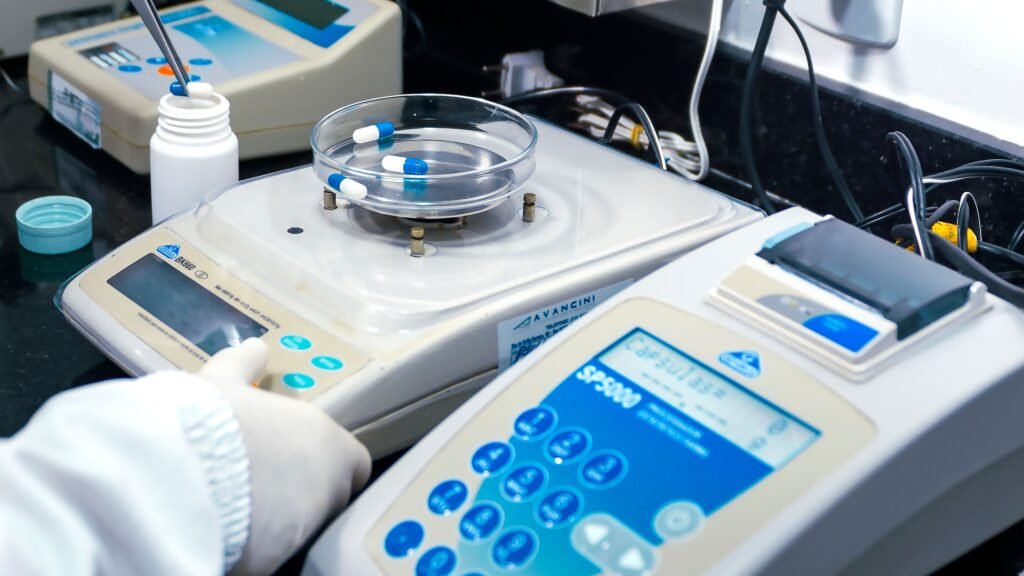
Finished product testing is the documented laboratory assessment used to determine whether a pharmaceutical batch meets its approved release specifications. A well-designed finished product testing SOP connects representative sampling, product-specific tests, controlled analytical methods, review of laboratory data and an authorised batch disposition decision.
For products regulated under US finished-pharmaceutical CGMP, 21 CFR 211.165 requires appropriate laboratory determination that each batch conforms to final specifications—including the identity and strength of each active ingredient—before release. The regulation does not establish one universal test panel for every dosage form. The applicable specification, approved application, compendial requirements and product-specific risks determine the tests and acceptance criteria.
Use this article as a controlled-document planning aid. It is an educational template, not an FDA-approved SOP or a substitute for your approved product specifications, application commitments, applicable USP–NF requirements, site procedures or Quality Unit approval.
Download the editable Word SOP template below. Adapt it to the approved product specification and your site’s Quality Management System, then complete the required review and approval before use.
Finished product testing SOP: key takeaways
- Define tests and acceptance criteria from approved, current product specifications; do not copy a generic panel without product-specific justification.
- Test each batch before release for conformance to final specifications, including active-ingredient identity and strength.
- Use written, approved sampling and testing procedures, representative samples, suitable methods and calibrated instruments.
- Apply additional microbiological, sterility, endotoxin, particulate, dissolution or package tests when required by the product specification or applicable regulation.
- Review the complete batch and laboratory record, investigate discrepancies and OOS results, and document the Quality Unit disposition before release.
1. Purpose and scope
This procedure framework describes how a pharmaceutical quality-control laboratory can plan, receive, sample, test, review and report finished drug-product samples for batch release. Adapt it to the site Quality Management System (QMS), dosage form, manufacturing process, control strategy and markets supplied.
The scope may include tablets, capsules, oral liquids, topical products, inhaled products, ophthalmic products, injectables and other finished dosage forms. Tests are selected by product; listing a test here does not make it mandatory for every product. Establish separate or linked procedures where microbiology, sterility assurance, container-closure integrity or specialist testing requires different controls.
2. FDA CGMP requirements that shape the procedure
The following provisions in 21 CFR Part 211 are central to finished-product laboratory control. Confirm the current text and applicability for the product and establishment.
- 21 CFR 211.160 — Laboratory controls: specifications, standards, sampling plans and test procedures must be scientifically sound and appropriate. Procedures and changes are documented and approved by the Quality Control Unit; instruments are calibrated at suitable intervals under a written program.
- 21 CFR 211.165 — Testing and release: each batch receives appropriate laboratory determination of conformance to final specifications, including identity and strength of each active ingredient, before release. Written sampling/testing plans and adequate acceptance criteria are required; test-method accuracy, sensitivity, specificity and reproducibility are established and documented.
- 21 CFR 211.167 — Special testing: each batch of a product represented as sterile and/or pyrogen-free receives appropriate laboratory testing to determine conformance to those requirements. Apply the additional requirements relevant to the product.
- 21 CFR 211.166 — Stability testing: a written stability program supports the established expiration date or period of use. Stability testing is related to, but distinct from, release testing.
- 21 CFR 211.192 — Production record review: the Quality Control Unit reviews production and control records before release or distribution. Unexplained discrepancies and specification failures are investigated, with conclusions and follow-up documented.
- 21 CFR 211.194 — Laboratory records: laboratory records include complete data derived from tests, methods, calculations, results, sample identification and review/approval details as applicable.
FDA’s CGMP Laboratory Controls Q&A and CGMP regulations resource provide additional context. Where a regulation, approved application, compendial standard or commitment differs from a generic example, follow the applicable requirement and the site’s approved procedures.
3. Responsibilities
- QC analyst: verifies sample identity and status; follows the approved method and sampling/testing procedure; records raw data contemporaneously; reports atypical, invalid or out-of-specification results promptly.
- QC reviewer: performs documented, independent review of calculations, chromatograms or other raw data, system suitability, method execution, audit trails where applicable, deviations and results against current specifications.
- Quality Control Unit / Quality Unit: approves laboratory controls and changes, reviews relevant records, oversees investigations and makes or authorises the documented batch disposition decision under the site’s quality system.
- Sampling personnel: collect, identify, protect and transport representative samples in accordance with the approved plan and procedures.
- Microbiology or specialist laboratory: performs applicable microbial, sterility, endotoxin or other specialist testing under the relevant validated or qualified procedures and controlled conditions.
4. Specifications and test selection
Before testing begins, confirm the current approved specification and test method for the exact product, strength, dosage form, market and packaging presentation. The specification may reflect an approved application, applicable compendial standards and justified internal controls. Confirm effective versions, acceptance criteria, sample quantities, methods, reporting conventions and any registered commitments.
Do not assume that a broad checklist is automatically a release requirement. The table below is a planning aid only. Include a test in the batch-release panel when it is required by the approved specification, applicable regulation or a justified and approved control strategy.
| Attribute / test area | Examples, when applicable | Procedure control |
|---|---|---|
| Identity and strength | Identity of each active ingredient; assay or potency | State method, specification, reporting basis and acceptance limits. |
| Purity and composition | Related substances, degradation products, preservative or other specified component | Use product-specific methods and limits; assess method suitability for the intended purpose. |
| Dosage-unit performance | Content uniformity, dissolution, disintegration or drug release | Apply where specified for the dosage form and product; record apparatus, conditions and calculations. |
| Physical and functional attributes | Appearance, pH, viscosity, fill volume, delivered dose, hardness or friability | Select only attributes relevant to the product specification and performance. |
| Microbiological quality | Microbial limits, absence of specified organisms, sterility or bacterial endotoxins | Apply the product’s microbial specification and the special requirements for sterile or pyrogen-free products. |
| Packaging and delivery system | Container-closure or device-related attributes, extractables/leachables or particulate controls | Use approved product-specific requirements and procedures; these tests are not a universal release panel. |
5. Sample receipt, storage and traceability
- Verify product name, strength, dosage form, batch number, manufacturing site, requested tests, sample quantity, container integrity and chain-of-custody details against the request and approved procedure.
- Assign a unique laboratory sample number and link it to the manufacturing batch and all test records. Record receipt date/time, condition on receipt, sampler, seal status and any discrepancy.
- Store samples under defined conditions that protect their integrity. Document storage location, temperature or other relevant conditions, transfers, reserve portions and any excursions.
- If identification, quantity, seal integrity, transport conditions or sample condition is unacceptable, place the sample on hold and notify the designated reviewer. Document the assessment and decision; do not silently replace or relabel samples.
6. Sampling plan and test preparation
Use an approved written sampling plan that identifies how samples are selected, the number of units or containers, locations or strata where relevant, handling precautions and the rationale for representativeness. Follow any product-specific sampling requirements. Sample-size selection should be scientifically justified and documented; avoid using a generic formula without a suitability assessment.
Before execution, confirm analyst training and authorisation, current method and specification versions, equipment calibration or qualification status, reagent and reference-standard status, environmental requirements, instrument sequence, system-suitability criteria and any required second-person checks. Record deviations from the approved plan and obtain the required review before proceeding.
7. Analytical execution and data integrity
- Execute the approved method as written. Verify sample and standard identities, preparation calculations, instrument parameters, sequence, system suitability and acceptance criteria before interpreting sample results.
- Record original observations and raw data at the time of performance in the controlled record or validated electronic system. Preserve audit trails and associated files in accordance with the site’s data-integrity and record-retention procedures.
- Document calculations, units, dilution factors, rounding, significant figures, chromatograms, instrument output, printouts, integrations and any manual processing or reintegration with the required rationale and review.
- If system suitability fails, the method is interrupted, an instrument is unsuitable or a result is questionable, stop and follow the approved deviation or laboratory-event procedure. Do not selectively omit data or repeat testing solely to obtain a passing result.
- Use validated or otherwise appropriately established methods, as required by the regulation and the intended use. Document method validation, transfer or verification and ongoing controls under approved procedures.
8. Result review, OOS and atypical results
Compare results with the current approved specification and report them using the approved units and conventions. A result outside an acceptance criterion is not converted into a passing result by averaging, extra testing or selecting a preferred replicate unless the approved method and specification explicitly provide for that treatment.
- Immediately notify the designated supervisor and Quality Unit of an OOS result, critical atypical trend, suspected mix-up, data-integrity concern or significant method event.
- Open and document the investigation under the site’s approved procedure. Preserve all original data and samples. Assess laboratory execution, calculations, equipment, standards, sample handling, method performance and potential manufacturing or product causes.
- Any retesting or resampling must have a scientifically justified, documented basis, predefined plan and required Quality Unit approval. Follow the applicable FDA guidance and site procedure; never “test into compliance.”
- Assess impact on the batch, related batches, other products, distributed product and stability data as appropriate. Record conclusions, corrective/preventive actions and disposition.
FDA explains its expectations in the guidance Investigating Out-of-Specification (OOS) Test Results for Pharmaceutical Production. Apply the current guidance together with the binding regulations and the approved site procedure.
9. Batch record review and disposition
Before batch disposition, confirm that the required release tests are complete and meet the approved acceptance criteria; any required special testing is complete; all deviations, invalid tests, atypical results and OOS investigations have documented outcomes; and relevant production, packaging, labeling and laboratory records have been reviewed by the Quality Control Unit. A passing certificate of analysis alone does not replace the required record review.
- Verify that each result is attributable to the correct batch and sample and that methods, specifications and calculations were current and approved.
- Confirm review of original data, system suitability, repeat or invalidated results, instrument records and required electronic audit trails.
- Check reconciliation of sample quantities and any retained or reserve samples required by the applicable procedure.
- Document the Quality Unit’s approval, rejection or hold decision, the date, authorised person and any restrictions. Do not distribute a batch before the required release decision.
10. Certificate of Analysis and laboratory records
The Certificate of Analysis (CoA) should accurately report the tests performed and results against the approved specification in the format required by the quality system and applicable customer or regulatory commitments. A CoA does not replace the underlying complete laboratory record.
- Use controlled templates and identify the product, strength, dosage form, batch, specification or method version, test, acceptance criterion, result, units and reportable conclusion as applicable.
- Identify any tests not performed only where the approved reporting procedure permits and the statement is accurate. Do not imply that an untested attribute was confirmed.
- Ensure raw data, calculations, analyst and reviewer records, instrument output, deviations, investigations and approvals are retrievable and linked to the batch.
- Correct errors through controlled, attributable entries that preserve the original record and explain the correction; do not overwrite or obscure the original data.
11. Batch-release checklist
- Current product specification, approved method and sampling plan confirmed.
- Sample identity, integrity, quantity, storage and traceability acceptable.
- Required tests for this product and market completed.
- System suitability and method execution met approved criteria.
- All results meet acceptance criteria, or failures have an approved documented disposition.
- Raw data, calculations, audit trails, deviations and OOS investigations reviewed.
- Relevant batch, packaging and labeling records reviewed by the Quality Control Unit.
- CoA and laboratory records complete, accurate and approved.
- Quality Unit disposition documented before release or distribution.
12. Common finished-product testing SOP gaps
- Using the same test panel for every product without linking it to the approved specification.
- Releasing a batch before all required results, record reviews or special testing are complete.
- Using an outdated specification, method, worksheet or acceptance criterion.
- Treating sterility testing as a substitute for an effective contamination-control and sterility-assurance strategy.
- Repeating tests or resampling without a documented scientific rationale and required approval.
- Failing to preserve original, invalid, atypical or electronic data in the laboratory record.
- Issuing a CoA whose claims exceed the tests performed or whose limits do not match the approved specification.
13. Frequently asked questions
Does FDA prescribe one finished-product testing panel for every drug?
No. The regulations require appropriate testing against the product’s final specifications and include specific requirements such as identity and strength testing for each batch. The appropriate panel depends on the product, dosage form, approved specification, applicable standards and relevant risks.
Must every batch be tested before release?
For finished drug products subject to 21 CFR 211.165, each batch must receive appropriate laboratory determination of satisfactory conformance to final specifications before release, including identity and strength of each active ingredient. Additional requirements apply based on the product, such as sterility or pyrogen testing where applicable.
Are dissolution, microbial limits and sterility testing required for every product?
No single answer applies to every product. These tests are included when required by the approved specification, product claims, applicable regulation or relevant compendial standard. Sterility testing is specifically relevant to products purporting to be sterile; microbial quality requirements vary by product.
Can an OOS result be retested until it passes?
No. Retesting must follow a scientifically justified, documented investigation and approved procedure. Preserve all results and do not test into compliance. The batch remains subject to the Quality Unit’s documented disposition.
Is this a ready-to-use FDA-approved SOP?
No. FDA does not approve this article as a site SOP. A qualified quality organisation must tailor, review, approve, train and control any local procedure against the current regulations, approved product information, applicable compendial requirements and site Quality Management System.
References and further reading
- 21 CFR Part 211 — Current Good Manufacturing Practice for Finished Pharmaceuticals.
- 21 CFR 211.160 — General requirements for laboratory controls.
- 21 CFR 211.165 — Testing and release for distribution.
- 21 CFR 211.167 — Special testing requirements.
- 21 CFR 211.166 — Stability testing.
- 21 CFR 211.192 — Production record review.
- 21 CFR 211.194 — Laboratory records.
- FDA: Questions and Answers on CGMP Requirements — Laboratory Controls.
- FDA Guidance: Investigating Out-of-Specification (OOS) Test Results for Pharmaceutical Production.
Regulatory note: This educational article summarizes selected requirements and is not legal or regulatory advice. Regulations, guidance, product approvals and compendial standards may change. Verify current requirements and approved product-specific controls before implementing a procedure.
A strong finished product testing SOP makes the path from approved specifications to documented batch disposition clear, reproducible and reviewable. Keep the procedure product-specific, protect the integrity of every result and require Quality Unit review before release.