1. Purpose
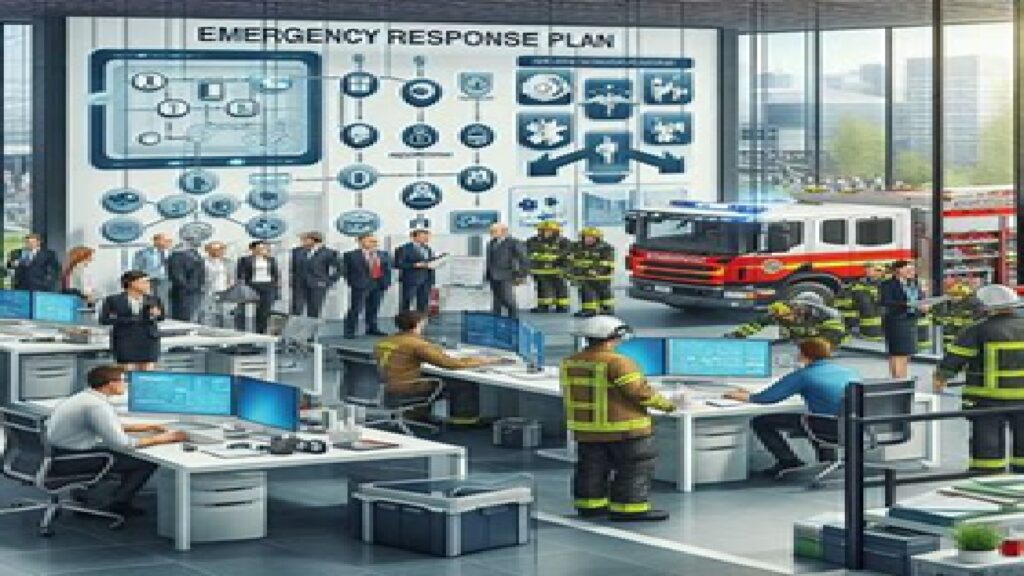
The purpose of this Emergency Response Plan (ERP) SOP is to establish a clear, structured, and rapid-response framework for managing emergencies that may threaten personnel safety, product quality, facility integrity, or the environment.
This SOP ensures that all employees are prepared to identify emergencies, respond efficiently, minimize damage, protect life, and restore operations safely.
2. Scope
This SOP applies to all employees, contractors, visitors, and departments within the facility.
It covers emergency situations including but not limited to:
- Fire or explosion
- Chemical spills or hazardous material exposure
- Medical emergencies
- Natural disasters (earthquake, flood, cyclone)
- Power failures and utility breakdowns
- Security threats or unauthorized access
- Equipment or process failures
3. Objectives
The Emergency Response Plan aims to:
- Protect human life and health
- Minimize property damage
- Prevent environmental contamination
- Maintain regulatory compliance
- Ensure rapid recovery of operations
- Provide clear roles and responsibilities
4. Types of Emergencies
4.1 Fire Emergencies
- Electrical fires
- Chemical fires
- Flammable solvent fires
- Equipment fires
4.2 Medical Emergencies
- Injury or accident
- Chemical exposure
- Burns
- Fainting or cardiac events
4.3 Chemical Spill Emergencies
- Toxic substance leaks
- Solvent spills
- Hazardous material contamination
4.4 Natural Disasters
- Earthquakes
- Flooding
- Severe storms
- Lightning strikes
4.5 Utility Failures
- Power outages
- HVAC system failure
- Water supply disruption
- Compressed air or nitrogen failure
5. Emergency Response Team (ERT)
An Emergency Response Team (ERT) must be established to manage emergencies.
Key Members
| Role | Responsibility |
|---|---|
| Incident Commander | Overall emergency control |
| Safety Officer | Personnel safety and evacuation |
| Fire Response Team | Fire suppression and containment |
| Medical Response Team | First aid and medical support |
| Communication Coordinator | Internal and external communication |
| Security Team | Access control and evacuation guidance |
6. Roles and Responsibilities
6.1 Incident Commander
- Takes complete control of the emergency response
- Evaluates severity of the situation
- Coordinates with emergency services
- Authorizes evacuation if required
6.2 Safety Officer
- Ensures safe evacuation
- Monitors assembly areas
- Prevents unauthorized re-entry
6.3 Emergency Response Team Members
- Provide immediate assistance
- Handle fire extinguishers and spill kits
- Support evacuation procedures
6.4 Employees
All employees must:
- Immediately report emergencies
- Follow evacuation procedures
- Assist injured personnel if safe
- Proceed to designated assembly points
7. Emergency Reporting Procedure
If an emergency occurs:
- Stay calm and assess the situation.
- Activate the nearest alarm system.
- Inform the Emergency Control Room or Supervisor.
- Provide critical details:
- Type of emergency
- Exact location
- Severity
- Injured personnel (if any)
- Follow instructions from the Emergency Response Team.
8. Emergency Evacuation Procedure
In case evacuation is required:
- Stop all operations safely if possible.
- Switch off equipment and utilities if safe.
- Follow designated evacuation routes.
- Do not use elevators.
- Assist injured or disabled personnel.
- Proceed to the designated assembly point.
- Wait for further instructions.
9. Fire Emergency Response
If a fire is detected:
- Raise the fire alarm immediately.
- Inform the Emergency Response Team.
- Use appropriate fire extinguishers if trained.
- Shut down equipment if safe.
- Evacuate the area if the fire spreads.
- Do not attempt to fight large fires.
Fire extinguishers must be used according to fire class:
| Fire Type | Extinguisher |
|---|---|
| Electrical | CO₂ |
| Chemical | Dry Powder |
| Flammable liquids | Foam |
| Paper/Wood | Water |
10. Chemical Spill Response
If a chemical spill occurs:
- Alert nearby personnel immediately.
- Identify the chemical involved.
- Wear appropriate Personal Protective Equipment (PPE).
- Contain the spill using spill kits.
- Prevent chemical entry into drains.
- Dispose of contaminated materials according to hazardous waste procedures.
Major spills must be handled by trained personnel only.
11. Medical Emergency Response
If someone is injured or becomes ill:
- Notify the Medical Response Team immediately.
- Do not move the injured person unnecessarily.
- Provide first aid if trained.
- Call emergency medical services if required.
- Record incident details for investigation.
12. Natural Disaster Response
Earthquake
- Drop to the ground
- Take cover under sturdy furniture
- Hold until shaking stops
- Evacuate after the tremor
Flood
- Move to higher ground
- Shut down electrical equipment
- Avoid water contact with electrical systems
Severe Storm
- Stay indoors
- Avoid windows and exposed areas
13. Communication During Emergencies
Effective communication is critical.
Communication methods include:
- Alarm systems
- Public announcement systems
- Emergency phone lines
- Internal messaging systems
Information must be communicated to:
- Employees
- Management
- Emergency authorities
- Regulatory bodies (if required)
14. Emergency Equipment
The following equipment must be available and regularly inspected:
- Fire extinguishers
- Fire alarms
- Emergency exits
- Spill kits
- First aid kits
- Emergency lighting
- Eye wash stations
- Safety showers
Routine inspections must ensure readiness at all times.
15. Training and Mock Drills
All employees must receive Emergency Response Training.
Training includes:
- Fire safety
- Evacuation procedures
- First aid basics
- Chemical spill response
Mock drills must be conducted at least twice per year to evaluate preparedness.
16. Documentation and Incident Investigation
All emergency incidents must be documented.
Documentation includes:
- Incident report
- Root cause analysis
- Corrective and Preventive Actions (CAPA)
- Training records
The goal is to prevent recurrence and improve emergency preparedness.
17. Review and Continuous Improvement
The Emergency Response Plan must be:
- Reviewed annually
- Updated after major incidents
- Improved based on drill observations
Continuous improvement ensures stronger safety culture and operational resilience.
Conclusion
An effective Emergency Response Plan is the backbone of organizational safety, preparedness, and resilience. By ensuring rapid response, clear communication, trained personnel, and reliable emergency systems, organizations can protect lives, maintain compliance, and recover quickly from unexpected events.
FAQ Questions – Emergency Response Plan SOP
1. What is an Emergency Response Plan in the workplace?
An Emergency Response Plan (ERP) is a documented procedure that outlines how an organization prepares for, responds to, and recovers from emergency situations such as fire, chemical spills, medical incidents, or natural disasters.
2. Why is an Emergency Response Plan important for organizations?
An Emergency Response Plan helps protect employees, minimize damage to facilities, ensure regulatory compliance, and maintain business continuity during unexpected incidents.
3. What are the key components of an Emergency Response Plan?
The main components include:
- Emergency identification procedures
- Roles and responsibilities
- Communication protocols
- Evacuation procedures
- Emergency equipment usage
- Incident reporting and investigation
4. Who should be part of the Emergency Response Team (ERT)?
The Emergency Response Team typically includes:
- Incident Commander
- Safety Officer
- Fire Response Team
- Medical Response Team
- Security Personnel
- Communication Coordinator
5. What types of emergencies should be included in an Emergency Response Plan?
Common emergencies covered include:
- Fire or explosion
- Chemical spills or hazardous material leaks
- Medical emergencies
- Natural disasters (earthquakes, floods, storms)
- Power failures or equipment breakdowns
- Security threats
6. What should employees do when an emergency alarm is activated?
Employees should stop work immediately, follow evacuation routes, proceed to the designated assembly area, and wait for further instructions from safety personnel.
7. How should a workplace handle a fire emergency?
In case of fire:
- Activate the fire alarm
- Inform the emergency response team
- Use a fire extinguisher if trained
- Evacuate the area if the fire spreads
8. What is the role of an Incident Commander during an emergency?
The Incident Commander is responsible for overall emergency coordination, decision-making, communication with authorities, and ensuring safe evacuation and response activities.
9. What emergency equipment should be available in workplaces?
Essential emergency equipment includes:
- Fire extinguishers
- Spill kits
- First aid kits
- Emergency lighting
- Fire alarms
- Eye wash stations
- Safety showers
10. How often should emergency drills be conducted?
Emergency drills should be conducted at least once or twice annually to ensure employees are familiar with emergency procedures.
11. What is the purpose of evacuation assembly points?
Assembly points ensure all employees are safely accounted for after evacuation and prevent confusion during emergencies.
12. What steps should be taken during a chemical spill emergency?
Key steps include:
- Alert nearby personnel
- Wear appropriate PPE
- Contain the spill using spill kits
- Prevent environmental contamination
- Inform trained response personnel
13. Why is emergency response training important for employees?
Training ensures employees know how to react quickly, reduce panic, follow safety procedures, and protect themselves and others during emergencies.
14. What should be included in an emergency incident report?
An emergency incident report should include:
- Date and time of incident
- Location
- Description of the event
- Personnel involved
- Injuries or damages
- Corrective actions taken
15. How does an Emergency Response Plan improve workplace safety?
An ERP improves safety by providing clear procedures, trained personnel, effective communication, and rapid response strategies during emergencies.
16. How often should an Emergency Response Plan be reviewed?
The plan should be reviewed annually or after any major incident, audit, or regulatory requirement update.
17. What is the difference between emergency preparedness and emergency response?
- Emergency preparedness involves planning, training, and prevention.
- Emergency response involves actions taken during and immediately after an emergency.
18. What role does communication play during emergencies?
Effective communication ensures rapid coordination, timely alerts, clear instructions, and proper reporting to management and emergency authorities.
19. What are the benefits of conducting emergency mock drills?
Mock drills help:
- Evaluate emergency readiness
- Improve response time
- Identify procedural gaps
- Train employees for real emergencies
20. How can organizations continuously improve their Emergency Response Plan?
Organizations can improve ERP by:
- Conducting regular safety audits
- Reviewing incident reports
- Updating procedures based on risks
- Providing continuous employee training
For more articles, Kindly Click here
For pharmaceutical jobs, follow us on LinkedIn
For Editable SOPs in Word format contact us on info@pharmaceuticalcarrier.com
For more information kindly follow us on www.pharmaguidelines.co.uk