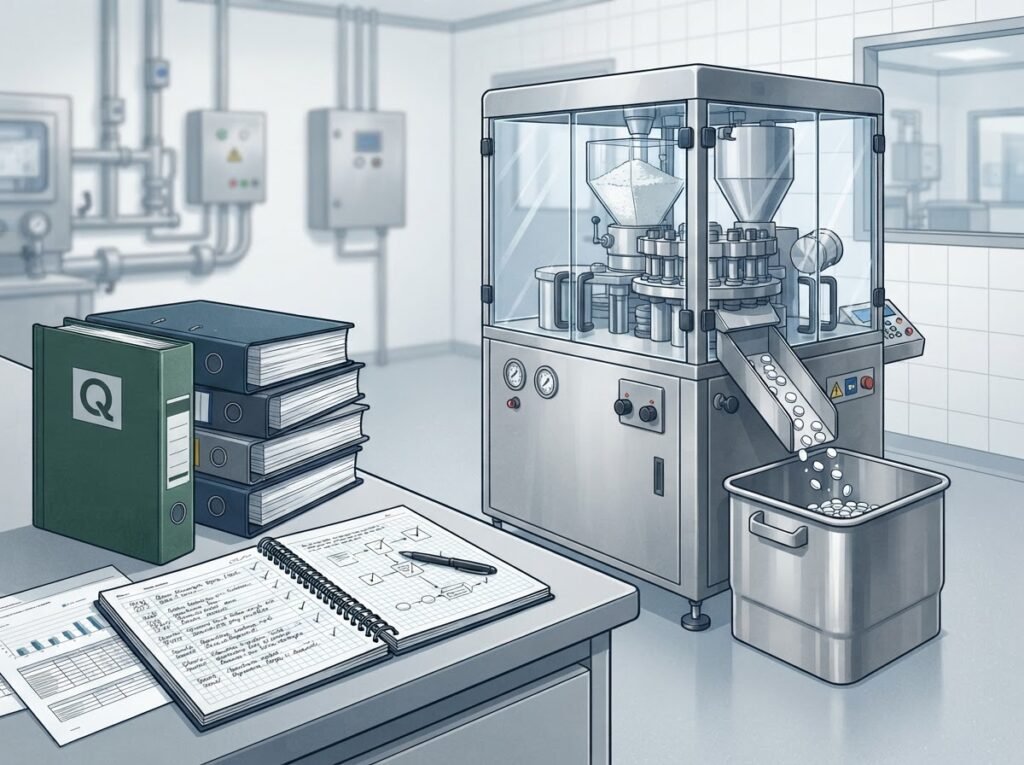
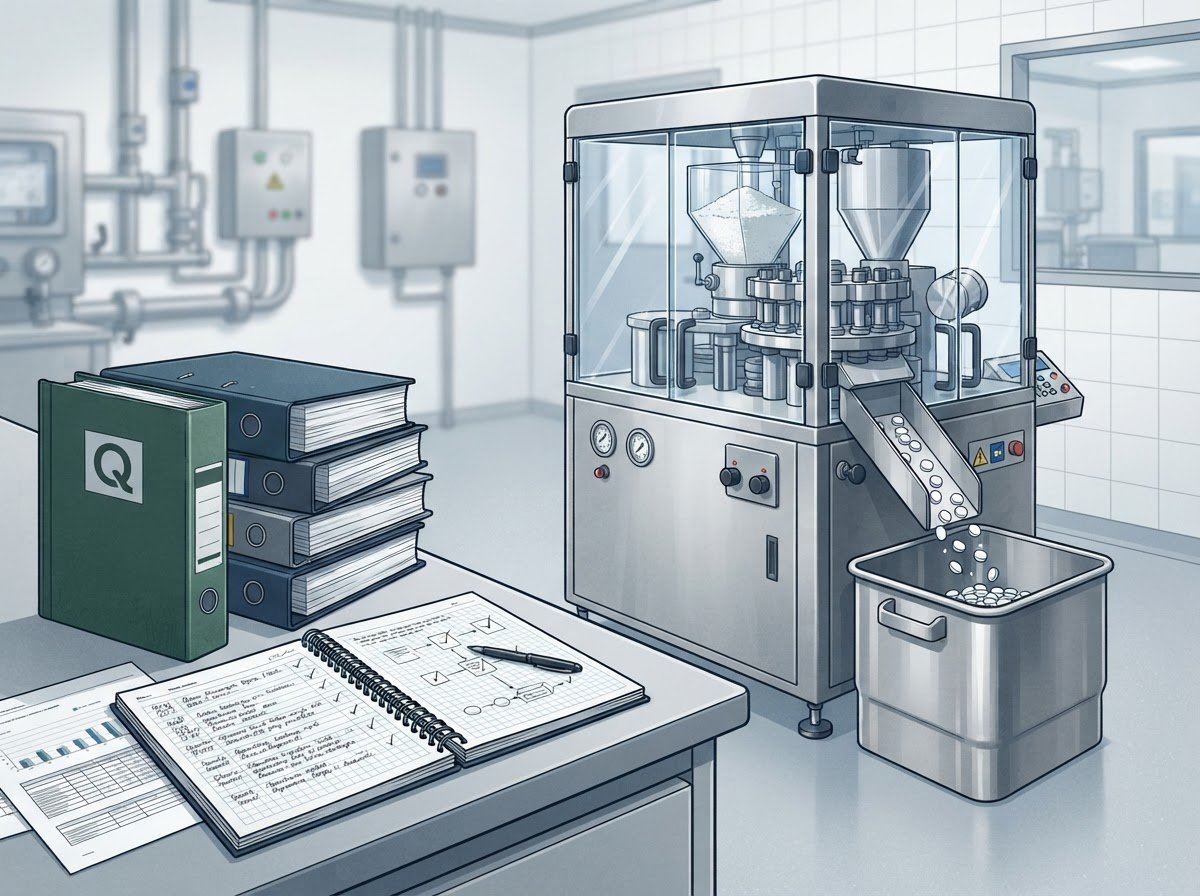
Process performance qualification (PPQ) is the stage of process validation in which commercial-scale manufacturing conditions and qualified equipment are evaluated to establish whether a process can consistently produce acceptable product. Batch count and sampling must be justified from process understanding, not copied from an arbitrary rule.
Position of PPQ in the validation lifecycle
The FDA lifecycle model comprises process design, process qualification and continued process verification. PPQ combines the actual facilities, utilities, equipment, trained personnel, control procedures and commercial manufacturing process. It does not replace process development or ongoing verification.
How many PPQ batches are needed?
There is no universal FDA requirement that three batches always suffice. Select the number of runs based on process complexity, prior knowledge, manufacturing history, variability, critical quality attributes, risk and statistical confidence. EU expectations and product-specific regulatory commitments must also be considered. Document the justification in the approved protocol.
Sampling strategy and representativeness
PPQ sampling is generally more extensive than routine production. Select sampling locations and times that can detect within-batch and between-batch variability, such as blend discharge, beginning/middle/end of filling, or points vulnerable to segregation. Justify sample size, frequency, analytical method and statistical approach.
Critical process parameters and quality attributes
Map each critical quality attribute to relevant material attributes and process parameters. For a solid oral dosage form, blend uniformity, tablet weight, hardness, assay, content uniformity and dissolution may require different sampling designs. A single composite sample cannot always detect location-specific variation.
Statistical interpretation
Review within-batch and between-batch variation, process trends, confidence intervals or tolerance intervals where appropriate. Passing individual specifications is necessary but may not be sufficient to demonstrate a stable, capable process. Investigate unexplained trends rather than treating all in-specification results as equivalent.
Protocol deviations and batch disposition
The approved PPQ protocol should define acceptance criteria, handling of deviations, planned rework or interventions, batch disposition, quality approvals and conditions for progression to routine manufacture. A failed PPQ criterion requires scientific investigation and may call for further runs or process changes.
Illustrative example
A tablet press PPQ protocol samples tablets at startup, steady state, after planned stops and near batch end, across justified press positions. Even if every assay meets specification, a systematic trend in weight after stops could indicate feeder dynamics and justify additional controls. The specific design must be based on the press and product.
Continued process verification
After qualification, monitor the variables shown to be important, establish justified review frequency and respond to emerging signals. Update the control strategy when new evidence, changes or investigations alter process understanding.
Related articles and official guidance
Use this article for education and planning. Current pharmacopoeial requirements, approved methods, product specifications and site procedures govern GMP decisions.