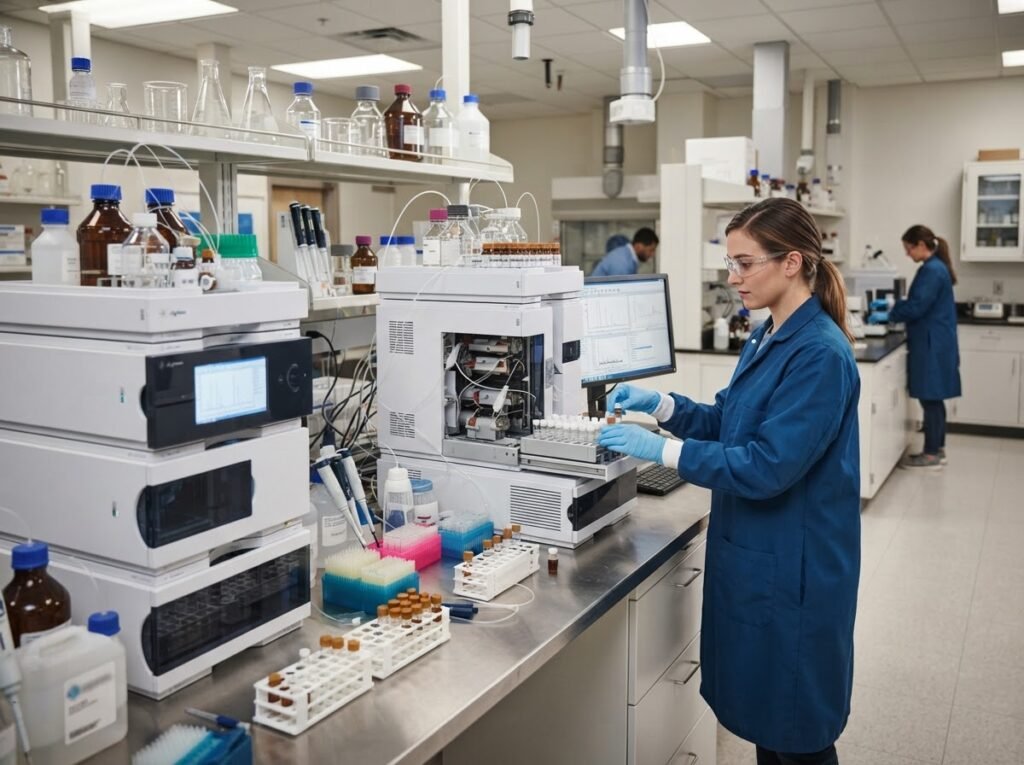
Karl Fischer (KF) titration measures water by a chemical reaction involving iodine and sulfur dioxide in an appropriate solvent system. Reliable moisture results depend on choosing the correct KF technique, controlling ambient moisture ingress and demonstrating that the sample matrix does not interfere.
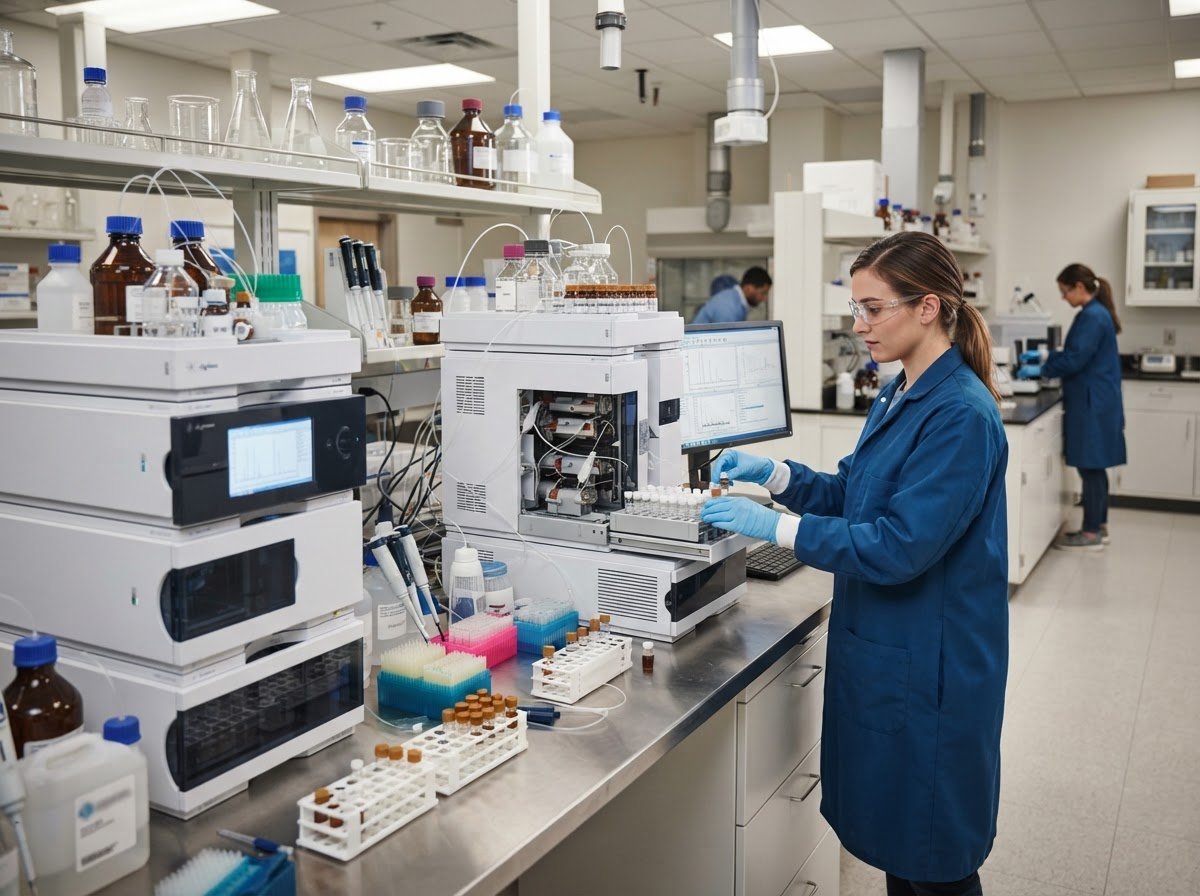
Volumetric versus coulometric Karl Fischer
Volumetric KF measures iodine supplied by a titrant of known titre and is often selected for higher water contents. Coulometric KF generates iodine electrochemically and is commonly suitable for trace-water determinations. The appropriate choice depends on expected water content, sample mass, matrix and method performance; neither technique is automatically superior.
Understand instrument drift
In coulometric KF, drift commonly reflects background water ingress or slow release of moisture from the cell. Check septa, seals, reagent condition, cell cleanliness and equilibration. Record drift before and after sample introduction where the method requires it. An unstable or excessive drift must be resolved rather than subtracted without justification.
Blank correction and sample handling
A blank may account for water introduced by sample vessels, transfer devices, solvents or oven accessories. Blank design must reflect the actual procedure. Hygroscopic materials should be transferred quickly in suitable closed containers; sample mass should be selected to provide a measurable water quantity without overloading the cell.
Matrix interference and recovery
Some aldehydes, ketones, oxidising or reducing substances and reactive excipients can interfere with conventional KF chemistry. Consider alternative reagents, oven transfer or a validated matrix-specific method. Demonstrate suitability using appropriate water recovery or standard addition where justified.
Illustrative calculation
For a volumetric method, water mass (mg) = [sample titrant volume (mL) minus applicable blank volume (mL)] × titre (mg/mL). Water content (%) = water mass (mg) ÷ sample mass (mg) × 100. Example: 1.20 mL sample consumption, 0.10 mL blank and 5.0 mg/mL titre yield 5.50 mg water. For a 250 mg sample, water content is 2.20%. Use the approved instrument calculation and any required dilution or extraction factors.
Method controls and troubleshooting
Verify titrant standardisation, suitability of the reference material, blank and drift limits, sample dissolution or extraction and replicate precision. High variability may indicate poor mixing, incomplete water extraction, inconsistent sample handling or changing environmental humidity. Oven KF requires validated transfer temperature to avoid decomposition that generates water.
Documentation and GMP review
Record reagent lot, titre or cell condition, sample mass, blank, drift, calculation, suitability checks, instrument ID, original data and any manual adjustments. Acceptance criteria are product- and method-specific; a moisture result should not be interpreted without the relevant specification and analytical uncertainty.
Further reading and primary sources
Educational guidance only. Follow current pharmacopoeial requirements, validated methods and site-approved GMP procedures.